
AI Just Stopped Being the Selling Point
AI became a commodity in nutrition apps this year. The real moat now is trust: clinical validation, safety work, and earning the right to hold someone's health data.
On July 8th, something quietly important happened in nutrition tech. January AI, a company that has spent years predicting how your body responds to food, got its Clinician Nutrition Monitor qualified on the Mayo Clinic Platform. In plain terms: an AI that reads what you eat now sits inside the software your doctor uses, right next to your medications, your weight, and your bloodwork.
Snap a photo of dinner, and your care team can see whether it fits your treatment plan.
Notice what is not the headline there. Not “the AI got smarter.” Not “it recognizes more foods.” The news is that a hospital system with more than a century of clinical credibility looked at the tool, evaluated it for real-world performance, and put its name on it. The moat wasn’t the model. It was the trust.
This is the argument I started The Nutrient to make, so I’ll admit I’m biased. But this month the money started saying it too.
Digital health startups raised $7.4 billion in the first half of 2026, a billion more than the same stretch last year. And buried in the analysis was a line that should be taped above every founder’s desk: “As foundation models improve and AI capabilities become easier to build, technical differentiation is becoming harder to sustain.” Translation: anyone can bolt an AI onto a food log now. It’s a commodity. Investors have noticed, and they’re chasing something else: domain expertise, real workflow ownership, genuine partnerships. Weight and metabolic health, for what it’s worth, was the second most-funded category of the half, behind only mental health.
So if “AI-powered” no longer means much on its own, what does?
Here’s how I’ve come to think about it, as both someone building one of these apps and someone who would want to use one. Every nutrition AI makes a promise it can’t fully keep: tell me about your body, and I’ll help. The convenience is real: describe your lunch, get your macros, done. But the moment you tell an app about your nut allergy, your reflux, your pregnancy, or your medication, you’ve handed it something that actually matters. And convenience without care is exactly the kind of thing that looks brilliant in a demo and turns dangerous at scale.
That’s the whole game now. Not “can the AI guess the calories in a burrito.” It can. It’s “when it gets something wrong (and it will), how much does that cost you, and what did the people who built it do to make sure the answer is ‘not much.’”
The apps that win the next few years won’t be the ones that added AI first. They’ll be the ones that earned the right to hold your health data: through clinical validation, through unglamorous safety work, through being honest about what the tool can’t do. January AI spent years earning a single Mayo Clinic checkmark. That’s slow, deeply unsexy, and, I’d argue, close to the only durable advantage left.
The nutrient density of your food matters. The trust density of the app tracking it matters more.
BITE of the Week: “Verified Before It’s Saved”
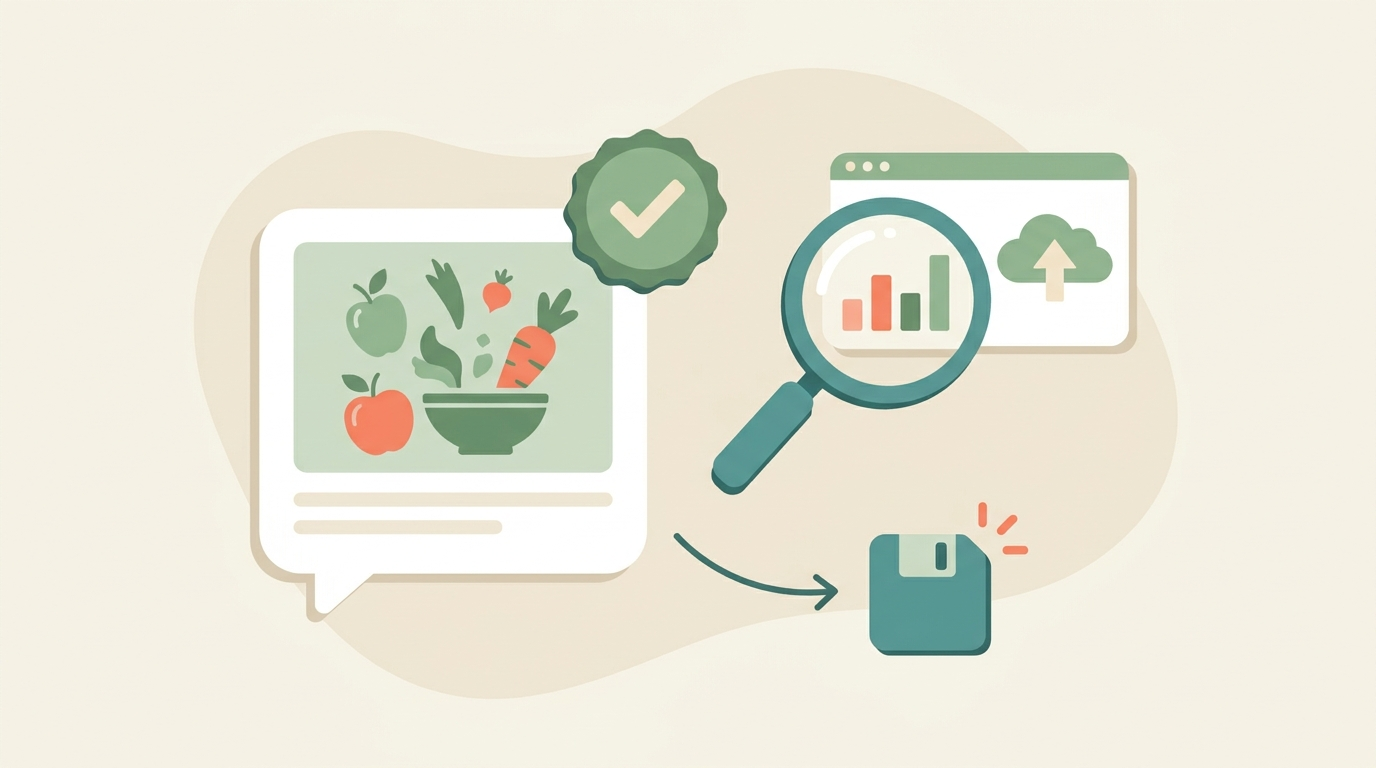
We shipped Mr BITE 1.2.0 this week, and there’s one small feature in it that’s really a statement of principle. You can now paste a recipe link (a cooking video, a blog, whatever) into the chat, and Mr BITE pulls out the ingredients and macros for you. The important word in that sentence is the quiet one: verified. The numbers get checked before they land in your plan, not just trusted because the AI produced them.
That’s the theme of the whole release, honestly. The headline features are the fun ones: a redesigned water tracker with one-tap undo, streak freeze and save for the days life gets in the way, and, on Android, active-calorie sync straight from Health Connect. But most of this cycle actually went into the invisible stuff: applying security fixes flagged by our advisors, hardening database queries against a class of bug that could return the wrong data, and adding automated review of community-submitted recipes so bad numbers don’t reach your plate.
None of that shows up in a screenshot. That’s kind of the point: the safety work is invisible when it’s working. If you’re on iOS or Android, update to 1.2.0 and try the recipe import. And if it ever pulls a number that looks off, tell me. That feedback loop is the actual product.
Three Quick Bites
-
An AI nutrition tool just went clinical. January AI’s Clinician Nutrition Monitor was qualified on the Mayo Clinic Platform and now feeds meal data into Epic, the software your doctor likely uses. Patients log food by photo, voice, or barcode; clinicians see it alongside meds and weight trends. A sign of where trusted nutrition AI is heading. MobiHealthNews
-
Digital health raised $7.4B in H1 2026, and AI alone won’t cut it. Funding is up a billion year over year, but investors are openly wary that “technical differentiation is becoming harder to sustain” as AI gets easy to build. They want domain depth and defensibility now. Weight and metabolic health was the second most-funded category. Fierce Healthcare
-
An AI that reads food labels in the grocery aisle, offline. Food Additive Lens, a free app out of the University of Connecticut, uses on-device AI to explain additives from a photo of the label in under five seconds, drawing on 4,000+ FDA-listed substances. No cloud, no “good/bad” verdicts, just plain-language facts. A nice model for privacy-first nutrition tools. Nutritional Outlook
Tool of the Week: Open Food Facts
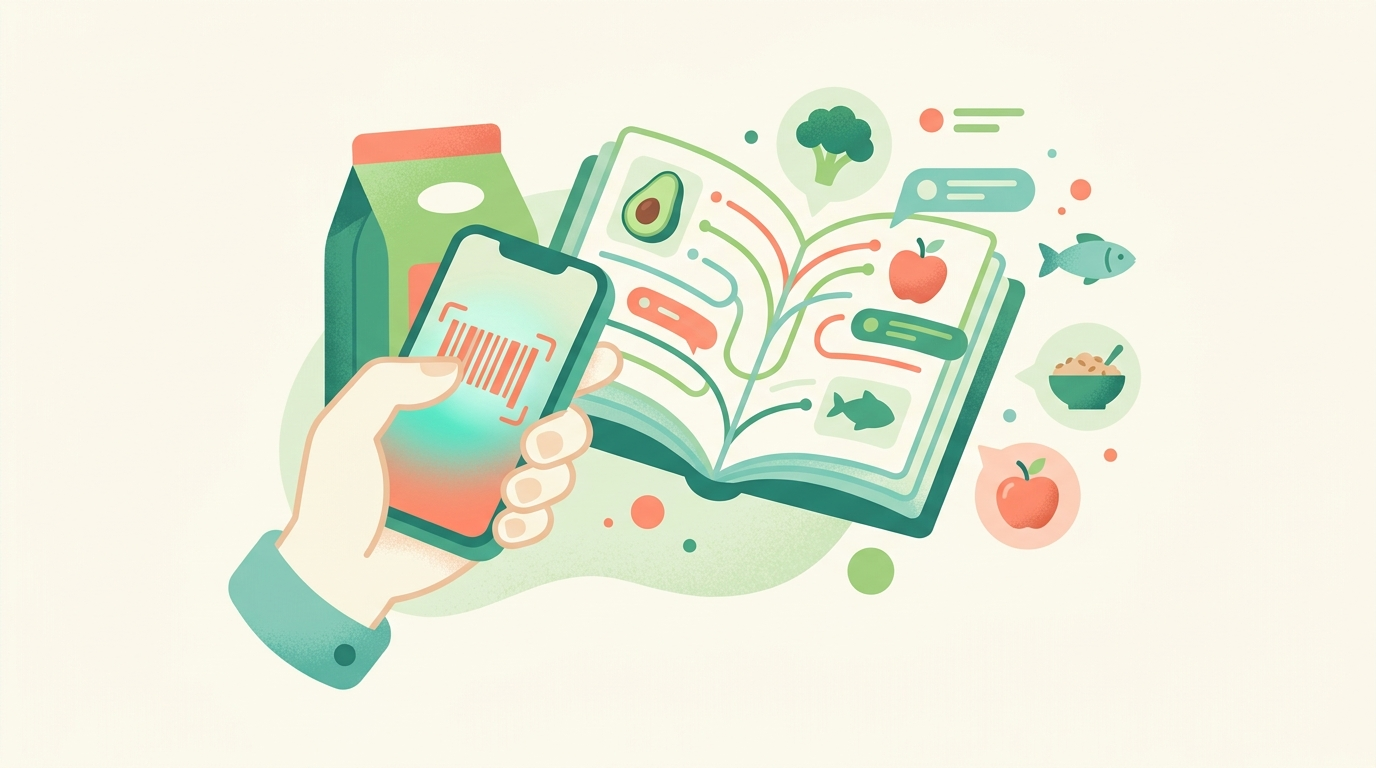
This week’s pick works whether you’re a reader or a builder. Open Food Facts is a free, open, crowd-sourced database of millions of food products from around the world: ingredients, nutrition facts, additives, and labels, all openly licensed. For readers: the mobile app lets you scan a barcode and see what’s actually in the thing you’re about to buy, with no subscription and no ads. For builders: it’s a free API, one we lean on ourselves for barcode search. Think of it as the Wikipedia of food data. Imperfect and occasionally incomplete, but transparent about it, which is more than most nutrition databases can say. openfoodfacts.org. Free and open source.
Thanks for reading. If this resonated, forward it to someone who cares what’s in their food. And if you want to see the trust-first approach in practice, Mr BITE is free on iOS and Android.
Collins, building Mr BITE