
The Calorie Total Was Never the Actionable Number
A JAMA Network Open trial found a low-fat vegan diet cut people's dietary energy density by nearly a third, and they lost weight without eating less food or counting a single calorie. Mr BITE logs the exact numbers that measure would need and has never shown it to anyone.

A trial out this month, published in JAMA Network Open and led by Dr. Hana Kahleova at the Physicians Committee for Responsible Medicine, ran 16 weeks of a low-fat vegan diet against a control group and found something that should bother anyone who builds a calorie-counting app for a living. The vegan group wasn’t told to eat less. They weren’t given a calorie target, a portion guide, or an app that turned red when they went over. They ate meat, dairy and eggs out of their diet and ate more vegetables, legumes, fruit and whole grains in its place, as much as they wanted, and their daily intake fell by roughly 355 calories anyway. They lost an average of 5.9 kilograms. The mechanism the researchers point to isn’t willpower. It’s arithmetic: swapping in high-volume, low-energy-density plant foods and swapping out calorie-dense animal foods cut the energy density of what people actually ate by close to 30%, so the same satisfying plate carried a third fewer calories in it.
Energy density is calories per gram. It’s not a new idea, nutrition science has known for decades that a food’s calories-per-gram ratio predicts satiety better than its calorie count alone, but it’s a strange idea for the calorie-counting app industry to have mostly ignored, because energy density is the one number this whole category is already sitting on top of. Every food log entry in Mr BITE carries a weight in grams and a calorie count. Divide one by the other and you have the exact figure Kahleova’s trial says moved the needle. We’ve never divided it. We show the calorie total, the macro rings, the running sum against a daily target, the same shape of number every calorie app has shown since the category existed. We have never once shown someone that the dinner they just logged carried 2.4 calories per gram against a 1.1 average across their week, which is the one number this study says would have actually told them something.
The reason this gap is easy to miss is that it doesn’t look like a gap. A calorie total is correct. It’s just answering the question “how much energy did you eat,” when the more useful question, the one this trial answers, is “how much of what you ate was doing the filling-you-up work per calorie it cost.” Those are different questions, and an app can nail the first one completely, every gram weighed, every calorie exact, and never once touch the second. That’s the trap with any well-built tracker: the accuracy of the number you show hides the fact that you picked the wrong number to show.
There’s a reason this particular blind spot is worth calling out here specifically, more than a generic “count fewer calories” headline would be. This isn’t a study telling people to restrict. Kahleova’s group didn’t restrict anything, they didn’t count anything, and they still ate less and lost weight, because the food itself changed the math without anyone doing math. That’s a genuinely different kind of intervention than the willpower-and-deficit framing every calorie app, Mr BITE included, defaults to. If the actionable lever is what a meal’s calories-per-gram ratio looks like rather than how hard someone resists a second helping, then a coach that only ever displays the deficit is coaching the wrong behavior, or at least a much harder one than the one the evidence points to.
None of this makes calorie counting wrong the way Issue 8 found the flat protein number wrong for someone who isn’t training. It’s a narrower miss: the data was already being collected in a form the study says matters, and it just never got surfaced as its own thing. That’s a smaller fix than rebuilding a coaching model around activity level, in principle. Whether it’s actually small in practice, whether an energy-density number reads as useful or just as one more figure competing with the calorie ring for a user’s attention, is the honest open question, and it’s the one worth answering before we ship it rather than after.
Three Quick Bites
-
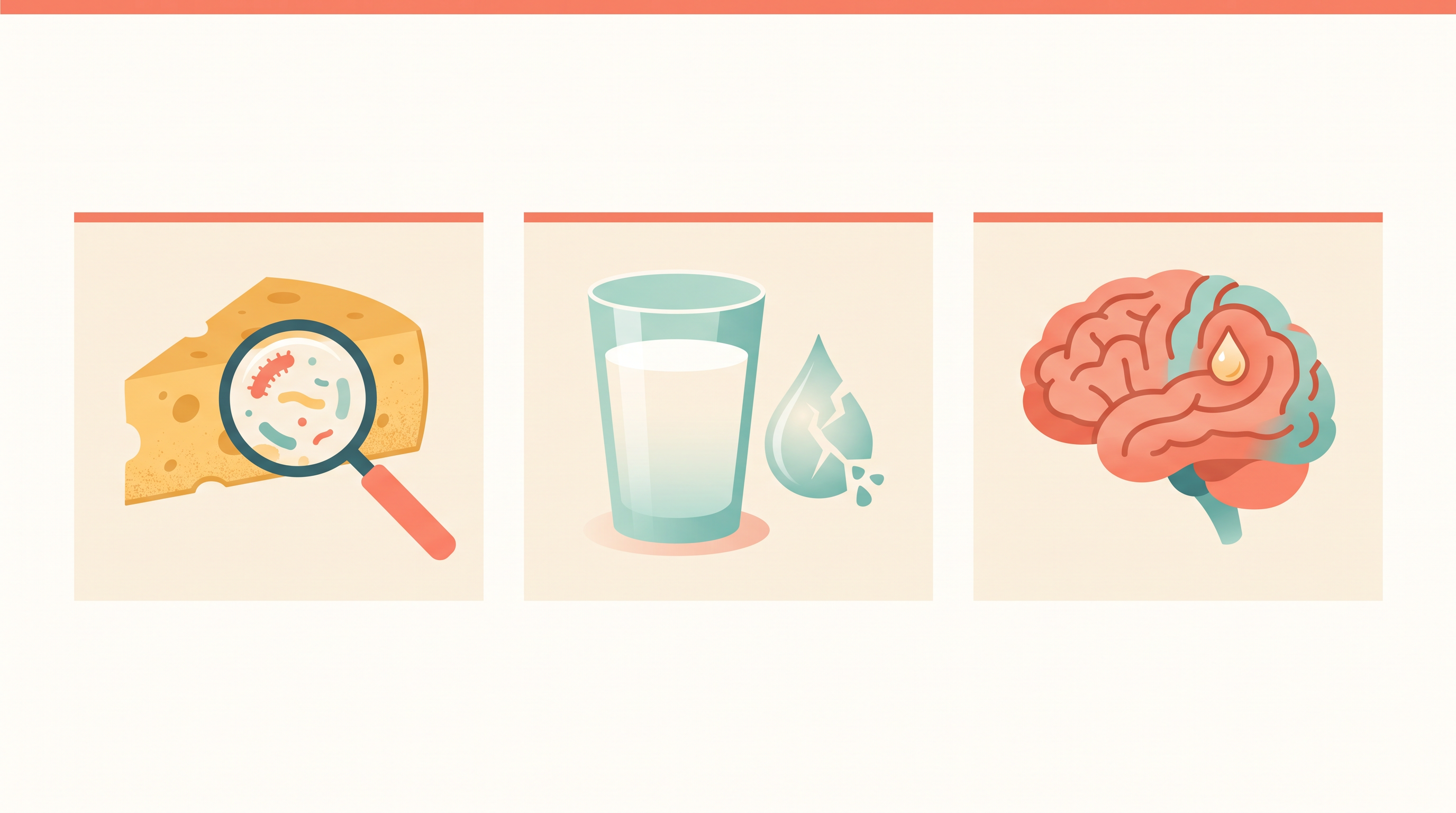
A 12-week trial found three daily servings of full-fat dairy caused no meaningful rise in weight, body fat or cholesterol, and improved blood pressure. University of Toronto researcher Harvey Anderson randomised 74 adults and found the full-fat dairy group also took in more calcium, protein and vitamin D than a low-fat comparison, evidence for what researchers call the “dairy matrix hypothesis”: that a food’s health effect depends on how its nutrients interact physically, not just which nutrients are present. The trial is small and short, so it isn’t proof full-fat dairy is healthier for everyone. ScienceDaily
-
A brain protein called OPA1 appears to help stop mice from overeating high-fat food, but only in males. Osaka Metropolitan University researchers led by Shigenobu Matsumura found that dietary fat raised OPA1 levels in appetite-controlling brain neurons in male mice but not females, and that an appetite-suppressing obesity drug worked markedly less well in female mice lacking the protein. The sex difference is the actual finding: it’s an early animal-model result, but it’s a concrete mechanism for why obesity risk and drug response can diverge by sex. ScienceDaily
-
The bacteria that give artisan cheese its flavor as it ages may also be doing useful work in the gut. A University of Reading team tracked three Oxfordshire cheeses from Nettlebed Creamery through maturation and found that as helpful bacteria transformed the cheeses’ texture and aroma, they also appeared to produce compounds linked to lower inflammation, cholesterol regulation and appetite control, with the longest-aged, hay-wrapped cheese showing the biggest gain in bacterial diversity. ScienceDaily
Tool of the Week: Open Food Facts

Since this issue is about a ratio, calories per gram, that depends on having real per-100g nutrient data for a food rather than a rounded label, this week’s pick is the free database built to hold exactly that. Open Food Facts is an open, crowd-sourced database of more than 3 million food products worldwide, built the way Wikipedia is: anyone can scan a barcode, photograph a label, and add or correct an entry, and every field, including energy density in kJ and kcal per 100g, is published under an open license with no signup wall. For readers: the app (also called Open Food Facts) lets you scan a product in the grocery aisle and see its actual per-100g energy density next to its Nutri-Score, which is a faster gut-check than doing the division yourself off the back of the box. For builders: the REST API is free, keyless for reasonable use, and returns structured per-100g nutrients for any product with a barcode, which is the actual building block an energy-density feature would be built on rather than backing the number out of a serving size that varies by brand. world.openfoodfacts.org. Free, open data, no signup required.
Thanks for reading. If you’d rather your coach told you which meals were doing more filling for fewer calories than just how many you ate, Mr BITE is free on iOS and Android.
Michael, building Mr BITE