
The Keto Preset Doesn't Know What Your Genes Already Decided
New Stanford research presented at NUTRITION 2026 finds a low-carb, high-fat diet spikes LDL cholesterol sharply in people who are genetically predisposed to it, and barely moves it in others. Mr BITE's Keto macro preset, 80 percent of calories from fat, is one tap away from any user, with no cholesterol or genetic screening standing between them and it.
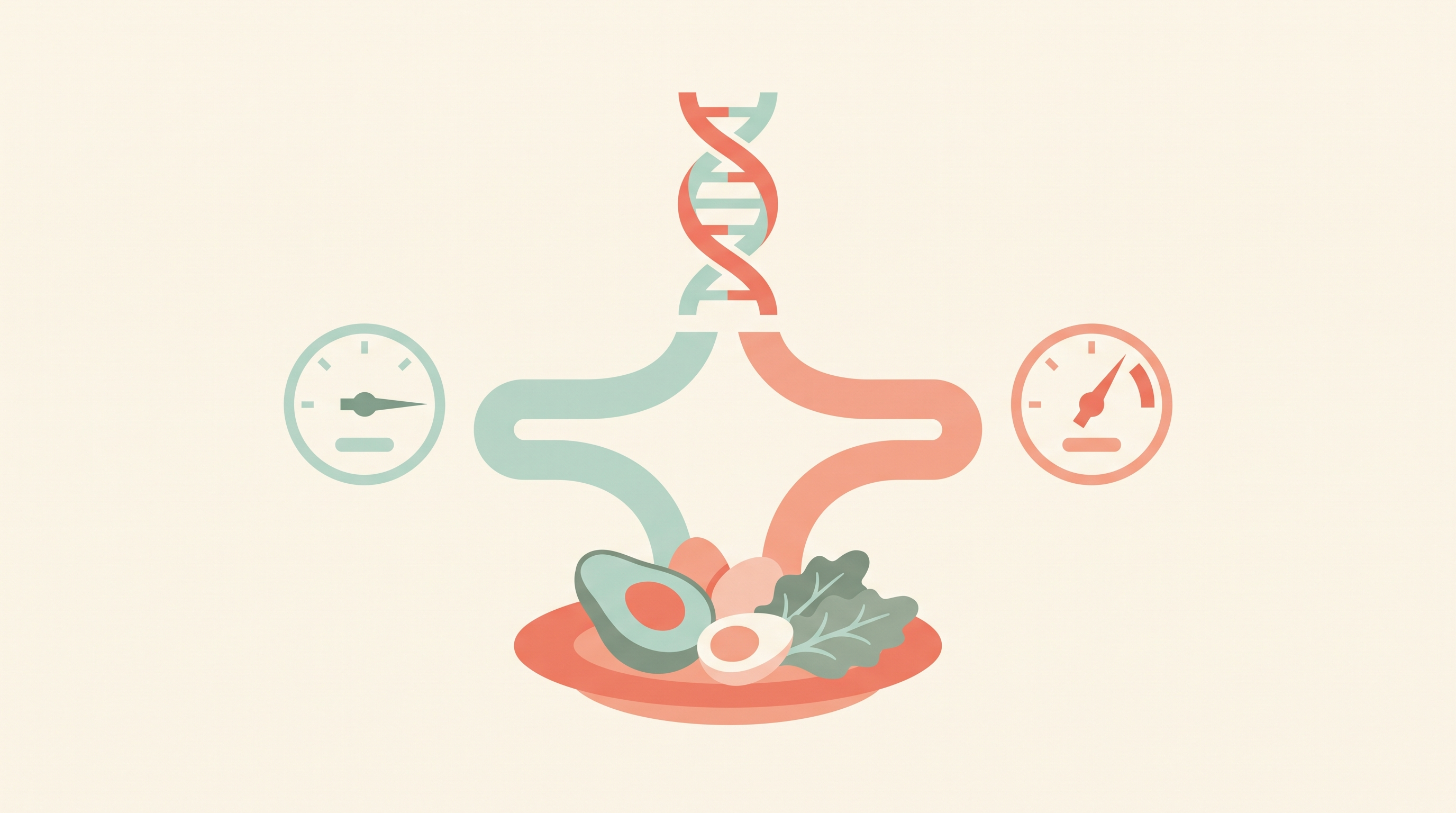
A team led by Alexa Barad at Stanford’s School of Medicine put a number on something a lot of low-carb dieters have suspected about themselves and never had proof for: the same diet does not do the same thing to everyone’s cholesterol. Working with data on saturated fat intake and genetic risk, Barad’s group found that people carrying a genetic predisposition toward high LDL saw their cholesterol climb sharply on a lower-carb diet, especially once saturated fat made up a larger share of it, while people without that predisposition barely moved at all on the same macros. Two people can follow the identical plan, hit the identical numbers, and walk away with completely different outcomes, and the difference sits in DNA neither of them chose. The work was presented last month at NUTRITION 2026, the American Society for Nutrition’s annual meeting in National Harbor, Maryland, as a conference presentation rather than a published, peer-reviewed paper, so I’m reading it as an early, credible signal rather than settled science. But it’s a signal worth taking seriously, because it’s about a macro split we hand out by name.
Mr BITE ships a Keto preset. It’s right there in calculateMacros.ts, alongside Balanced, Cut, High Protein and Bulk: 2.0 grams of protein per kilogram of bodyweight, then 20 percent of the remaining calories to carbs, 80 percent to fat. The description a user sees is one line, “2.0g protein/kg, 20% carbs, rest fats,” tagged as good for “Keto diet, Low carb lifestyle, Appetite control, Metabolic flexibility.” Tapping it is the entire interaction. There’s no question about family history, no mention of LDL, nothing that would tell a genetically predisposed user that the same 80-percent-fat plan that leaves someone else’s numbers untouched might not be doing the same for them.
I went looking for where cholesterol does come up in our code, because I assumed there had to be something. There is, just not where the preset lives. mrBiteSafety.ts keeps a list of words that flag a chat message as medically adjacent: diabetes, PCOS, pregnancy, blood pressure, and cholesterol among them. Type the word “cholesterol” into a chat with the coach outside a general food-planning context, and the safety layer steps in and redirects the conversation to a clinician. It’s a real, working safeguard, and I’m glad it’s there. But it only fires on the word. It has nothing to do with which macro preset a user picked, and the macro preset screen has nothing to do with it. A user can select Keto in the goal picker and never once type a sentence that trips the safety net, because nothing about selecting a macro split requires typing anything at all. Two completely separate systems, one reactive and keyword-triggered, one a single tap with no gate, and the thing the new Stanford research says actually matters, whether this specific person’s genes make 80 percent of calories from fat a good idea or a risky one, isn’t checked by either.
I don’t think the fix here is a genetic test screen nobody asked for, and I’m not going to pretend I have the right copy for a warning label that wouldn’t just get tapped past like every other disclaimer. What I do think is that “the safety system already handles this” was a comfortable thing to believe right up until I actually traced where the Keto preset lives against where the cholesterol keyword lives, and found out they’d never once been in the same file. The research didn’t create the gap. It just made it a lot harder for me to keep assuming it wasn’t there.
Three Quick Bites

-
A Stanford-led analysis presented at NUTRITION 2026 found that a person’s genetic predisposition determines how sharply a low-carb diet raises LDL cholesterol, especially as saturated fat takes up a larger share of the plan. Presented by postdoctoral scholar Alexa Barad at the American Society for Nutrition’s annual meeting in National Harbor, Maryland, the analysis found real heterogeneity in outcomes: some people’s LDL climbed sharply on a lower-carb, higher-saturated-fat diet, while others on the same macros saw almost no change, tracking with genetic risk rather than the diet itself. It’s a conference presentation, not yet a published peer-reviewed paper. It’s the study behind the essay above. ScienceDaily
-
A two-year analysis of the CALERIE calorie-restriction trial found that cutting calories by about 14% lowered a specific immune protein, C3, that drives age-related inflammation, and researchers are now exploring whether existing FDA-approved drugs could target it directly. Published in Nature Aging, the work traced elevated C3a back to a specific population of aging fat-tissue macrophages and showed calorie restriction measurably reduced it in real trial participants, raising the possibility of capturing some of calorie restriction’s anti-inflammatory benefit without the restriction itself, though any drug application is still exploratory. ScienceDaily
-
Karolinska Institutet researchers found that gut bacteria convert dietary nitrate and iron, both abundant in leafy greens and beets, into compounds called dinitrosyl iron complexes that were linked to lower blood pressure, better blood sugar control and less liver fat in animal models. Published in Cell, the study combined mouse, cell, bacterial and human sample data to trace a specific mechanism by which the gut microbiome appears to convert plant compounds into something the body can use, adding a concrete “how” to the long-standing, looser advice to eat more vegetables. ScienceDaily
Tool of the Week: MedlinePlus Genetics

Since this issue is about a difference written into DNA, not diet, this week’s pick is the free reference I’d point any curious reader toward before they start guessing at what “genetic predisposition to high cholesterol” actually means for them. MedlinePlus Genetics, built and maintained by the National Library of Medicine, explains specific genes, conditions and gene-diet interactions in plain language, each entry backed by citations back to the primary research, without trying to sell a test or a supplement alongside it. For readers: it’s a legitimate first stop before a consumer genetic report, or a way to actually understand one after you’ve already paid for it. For builders: it’s a useful model for what a health claim looks like when it’s written to inform rather than convert, exactly the standard this issue’s essay found our own Keto preset falling short of. MedlinePlus Genetics. Free, no signup required.
Thanks for reading. If you’d rather your coach admitted what it can’t tell from a tap on a screen, Mr BITE is free on iOS and Android.
Collins, building Mr BITE