
Ultra-Processed Was Never the Number That Mattered
A 200,000-person, four-decade Harvard study found diet quality predicts heart disease and diabetes risk far better than how processed a food is. That's a problem for any app, ours included, tempted to slap a processed-food score on your plate.
On July 28th, at the same NUTRITION 2026 conference in National Harbor where last issue’s fat-invisibility study came from, a team from Harvard’s T.H. Chan School of Public Health stood up with a much bigger dataset and a much less convenient finding. They tracked more than 200,000 U.S. adults for up to four decades and asked a blunt question: when you’re predicting heart disease, type 2 diabetes, and death, what matters more, how processed someone’s diet is, or how nutritionally good it is? The answer wasn’t close. Diet quality dominated. Within any given quality tier, people eating mostly factory-made food and people eating mostly home-cooked food carried roughly the same risk. A high-quality, plant-forward diet, heavy on whole grains, legumes, fruit, vegetables, nuts and good plant oils, beat a low-quality one whether the food came out of a box or a pan.
Sit with that for a second, because it lands at an odd moment. The same week, the federal government relaunched its entire food message around the opposite framing. HHS’s new “Real Food Show” premiered July 30th with a chef making salmon cakes on camera, explicitly tying the recipe to dietary guidelines built around “real,” minimally processed ingredients. Processing-level thinking is having a moment right now: seed oil rules, dye phase-outs, an upside-down food pyramid, all organized around the idea that how a food was made is the thing worth regulating. Meanwhile the largest cohort study anyone’s run on this in years says that’s not the variable that actually predicts whether you get sick.
I don’t think the Harvard finding lets ultra-processed food entirely off the hook, and I don’t think the instinct behind the guidelines is crazy either. Plenty of heavily processed food really is bad for you, just not because it’s processed, because it’s low fiber, high sugar, low protein, low plant diversity. Processing is a proxy. Sometimes a decent one. But a proxy that’s cheap to compute and satisfying to act on has a way of replacing the thing it was standing in for, and that’s exactly the failure mode nutrition apps, including the one I build, need to watch for in ourselves.
Here’s the version of that mistake I’d actually make if I weren’t careful: slap a “processed score” badge on every meal Mr BITE logs. It’s an easy feature. It looks smart in a screenshot: green badge for the salad, red badge for the cereal. And it would be actively misleading, because a fortified whole-grain cereal or a can of black beans is “processed” in exactly the sense that matters not at all, while a technically unprocessed plate of white rice and butter tells you nothing good about someone’s diet quality. A single processing flag collapses two different questions, is this food good for you, and was it made in a factory, into one number. The Harvard data says the second question barely correlates with the first.
The harder, less demo-friendly thing to build is something that actually tracks quality: fiber, protein source, plant diversity over a week, added sugar load, sodium, the stuff that showed up as the real signal across 200,000 people and four decades. That’s slower to compute, less satisfying to badge, and a lot more useful. It’s the same lesson as the fat-invisibility piece two weeks ago, dressed differently: the number that’s cheapest to show you is rarely the number that’s actually true, and an app that cares more about looking decisive than being right will reach for the cheap one every time.
Nutrition science keeps handing this industry the same message in different studies. Stop asking whether a food was touched by a machine. Start asking what’s actually in it, and how much of it, over time. That’s a harder feature to ship. It’s also the only one worth shipping.
BITE of the Week: BITE Pro Ships (to App Review)
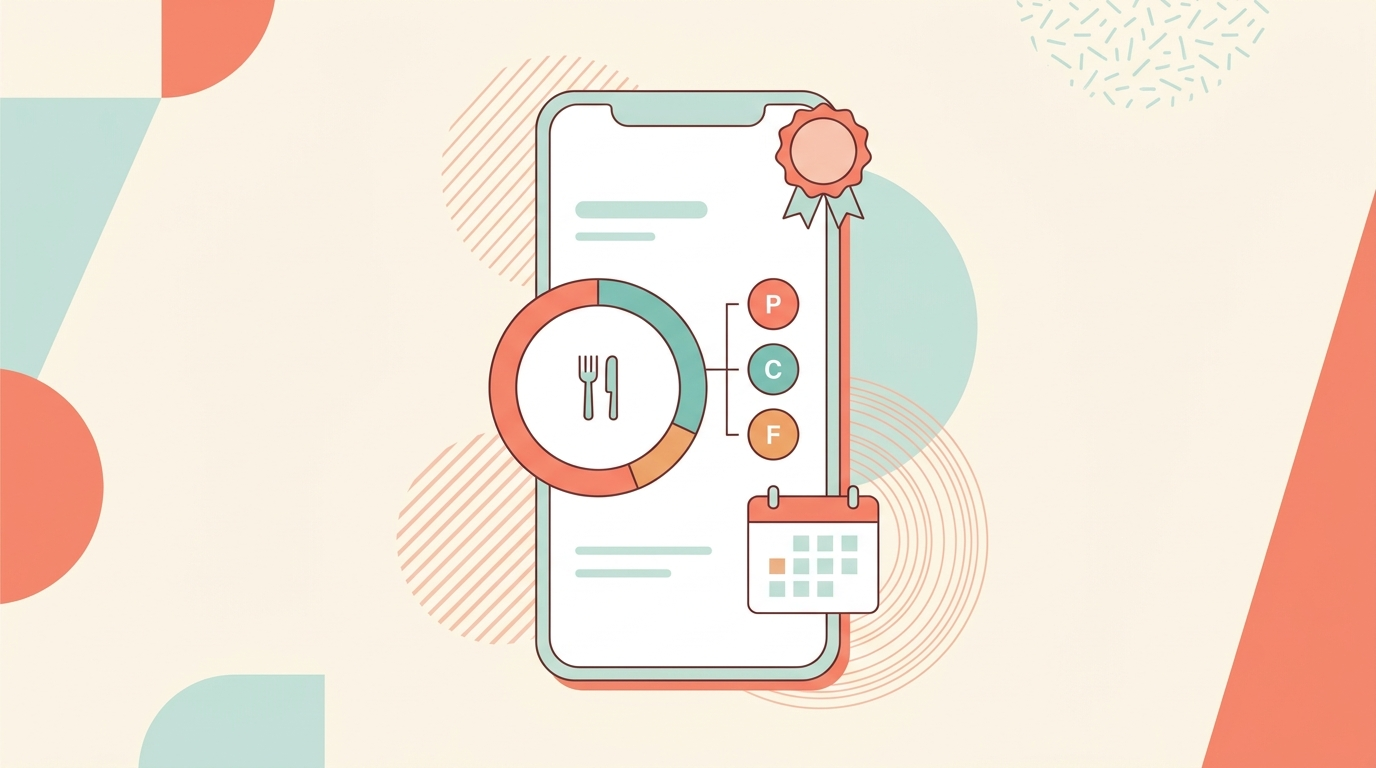
Since Issue 2, the biggest thing that happened wasn’t a single feature, it was a merge. On August 2nd, the paid-tier branch landed in main: BITE Pro, a redesigned food-logging sheet, Mr BITE recipe forking, a second version of the AI coach, and every paid-tier edge function, all in one lineage. The live app on your phone is still 1.3.1. What’s in main now is 1.4.1, and as of this week it’s sitting with Apple and Google for review, not in your hands yet.
Two things in that merge are worth calling out beyond “there’s a paywall now.” First, logging a meal by photo, voice, or hand now opens a slide-up sheet with the calorie total shown as a ring segmented by which macro actually contributed the energy, editable gram values sitting right beside it, and a real month calendar if you want to log a day you missed or plan one ahead, instead of the three-week grid we’d been squeezing people into. Second, and this is the one I actually care about: editing a recipe now depends on whose it is. Ask Mr BITE to make one of its own AI-generated recipes gluten-free, and it updates in place. Ask it to change a recipe you imported or wrote yourself, and it forks a new copy instead, so the original, and whoever gets credit for it, survives the edit. That’s a small rule with a real point behind it: an AI assistant editing your stuff shouldn’t quietly erase whose it was.
The less visible half of this cycle was, again, token budgets. Two different AI calls, recalculating a meal’s macros and the coach’s candidate assessment, were dying under the exact same failure signature: our model spends reasoning tokens from the same budget as its answer, so a request sized for an 800-token answer would burn the whole budget thinking and return nothing. We found and fixed the same class of bug at two separate call sites this cycle, which tells me it’s a pattern worth watching for rather than a one-off. If BITE Pro’s review goes the way we expect, next issue is the one where I get to tell you it’s actually live.
Three Quick Bites
-
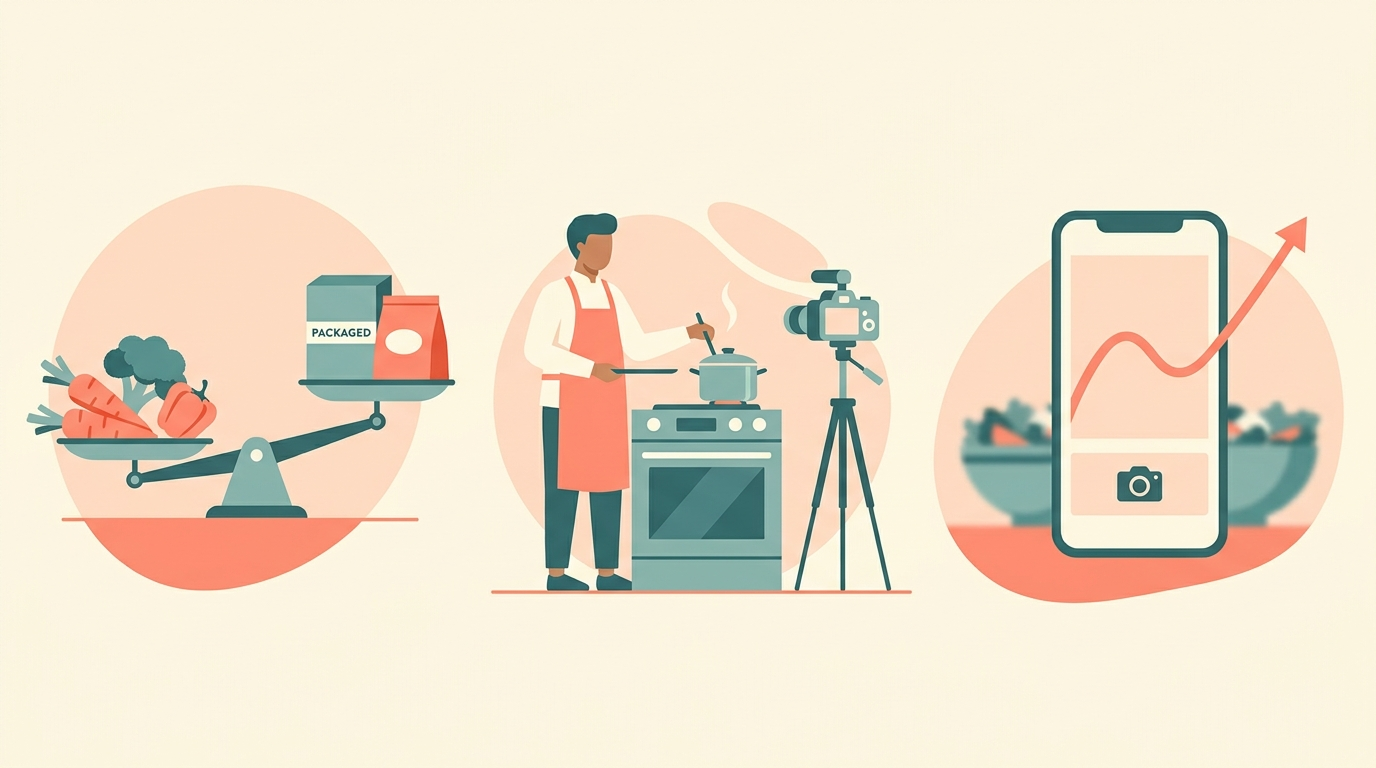
Diet quality beats processing level, at 200,000-person scale. Harvard T.H. Chan researchers tracked more than 200,000 U.S. adults across up to four decades and found nutritional quality, not how industrially processed a food was, predicted heart disease, type 2 diabetes and mortality risk. Within the same quality tier, factory-made and home-cooked diets carried about the same risk. Presented July 28th at NUTRITION 2026, the American Society for Nutrition’s flagship meeting. EurekAlert
-
HHS launched a government cooking show built on the opposite premise. On July 30th, Secretary Kennedy debuted “The Real Food Show,” an online cooking series pairing celebrity chefs with recipes built around whole, minimally processed ingredients, tied to the 2026 Dietary Guidelines. Worth watching against the Harvard finding above: two different bets on what “eating well” should actually optimize for. HHS.gov
-
January AI dropped glucose prediction that needs no sensor. On July 29th, January AI rolled out a major update letting its free app predict how a meal will move a user’s blood sugar without a continuous glucose monitor, alongside one-tap medical-record import from more than 50,000 health systems. A sign of where the “trust density” argument from Issue 1 keeps heading: same company, bigger claim. BusinessWire
Tool of the Week: USDA FoodData Central

This week’s pick is the database a lot of the apps in this issue, ours included, quietly stand on. USDA FoodData Central is the U.S. government’s free, public nutrient database: branded products, raw foods, and the lab-analyzed “Foundation Foods” dataset the industry treats as ground truth, all searchable on the web or through a free API with no login wall for casual use. For readers: it’s the fastest way to check a claim a calorie app gave you, since it’s often where that app got its numbers in the first place. For builders: the API returns macro and micronutrient data by the gram, sourced back to actual USDA lab analysis rather than aggregated guesses. It won’t win a design award, but it’s the closest thing nutrition tech has to a shared, government-audited source of truth. fdc.nal.usda.gov. Free, public, U.S. government data.
Thanks for reading. If you’d rather your app track what’s actually in your food than how it was made, Mr BITE is free on iOS and Android.
Collins, building Mr BITE