
Every App Hands Out the Same Protein Target, and the Science Disagrees
A 350-paper review out of the University of Wisconsin-Madison found protein needs hinge on how active someone actually is, not age or weight alone, which most nutrition apps, Mr BITE included, don't yet act on.

On July 31st, researchers at the University of Wisconsin-Madison published a review that took on one of the most confidently repeated numbers in nutrition: how much protein a person actually needs. Dudley Lamming and Bailey Knopf pulled together more than 350 studies, in humans, mice, insects and yeast, and laid out a mechanism that keeps showing up across all of them: restricting protein, and in particular a handful of specific amino acids, improves metabolic health, lowers inflammation, reduces cellular damage, and switches on some of the same pathways linked to a longer healthspan. It ran in Cell Press Blue under the title “The hallmarks of protein and amino acid restriction in aging and longevity,” landing in the middle of a diet culture that has spent the last several years doing the opposite of what the review recommends: eat more protein, as a blanket rule that applies to everyone reading the headline.
Lamming isn’t arguing protein is bad. “It’s absolutely crystal clear that there are benefits of protein to muscle growth and exercise response of active individuals,” he said in comments released alongside the review. The actual claim is narrower, and for a coaching app, more useful: benefit depends on what a person is doing with the protein. “Because most people are relatively sedentary, many people are likely consuming more protein than they actually need, which probably has negative health consequences,” he said, and his stated recommendation is the one that should needle every fitness app quietly running one formula for every user: “protein recommendations should be personalized based not just on age, but also on how physically active people are.”
That’s not a subtle point once someone says it, but it’s exactly the point a single number can’t hold. The protein target sitting inside most nutrition apps, Mr Bite included, comes out of some version of grams per pound of bodyweight, a formula built and validated on people training hard enough to need the muscle-protein-synthesis boost it’s chasing. Applied to someone whose day is a desk, two meetings and a walk to the kitchen, that formula isn’t wrong exactly. It’s answering a question nobody asked. The failure mode here isn’t a bad heuristic smuggled in from somewhere, the kind Issue 7 was about. It’s a good heuristic, correctly derived, applied to a population that never opted into the assumption behind it.
Here’s what makes this genuinely actionable rather than just another “eat less protein” headline: Mr Bite already has the input Lamming says the target should move on. Every step count synced from a phone, every workout logged, every rest day tapped into the app is a direct answer to the one question a flat macro split can’t ask. A coach that already collects activity data and still hands a marathoner and a remote worker the same 1.6 grams per kilogram isn’t personalizing anything. It’s running the general formula through an interface that only looks personalized. The review isn’t telling us protein targets are wrong. It’s telling us which variable a target has to move on, and that variable is mostly already sitting in the database, unused for this particular number.
So the actual question coming out of this issue isn’t “should everyone eat less protein.” It’s whether our own target actually responds to logged activity the way the science says it should, or whether it’s one more figure that reads as precise because it carries a decimal point, while quietly being the same guess for the reader on their couch and the reader training for a marathon. A formula that’s correct for one population and silently applied to a different one is a subtler failure than a wrong rule of thumb, because nothing about the number looks broken. It just was never about the person reading it.
BITE of the Week: The Trigger That Kept Overwriting What You Told It
Version status first, and it’s a correction to last issue as much as an update. Issue 7 reported Android stuck on 1.5.0 while a Play upload-key reset sat waiting on Google’s approval behind the 1.8.0 build. That reset was actually accepted the same day Issue 7 published: 1.8.1 (versionCode 133) shipped on Android via the rotated key on August 13th, so both platforms are genuinely on 1.8.1 now, iOS build 102 and Android build 133. The old production-oldkey build profile, kept only as a fallback while the reset was pending, has since been deleted outright: it signed with a leaked key sitting in git history, and once Google accepted the rotation, keeping the fallback around was just a footgun.
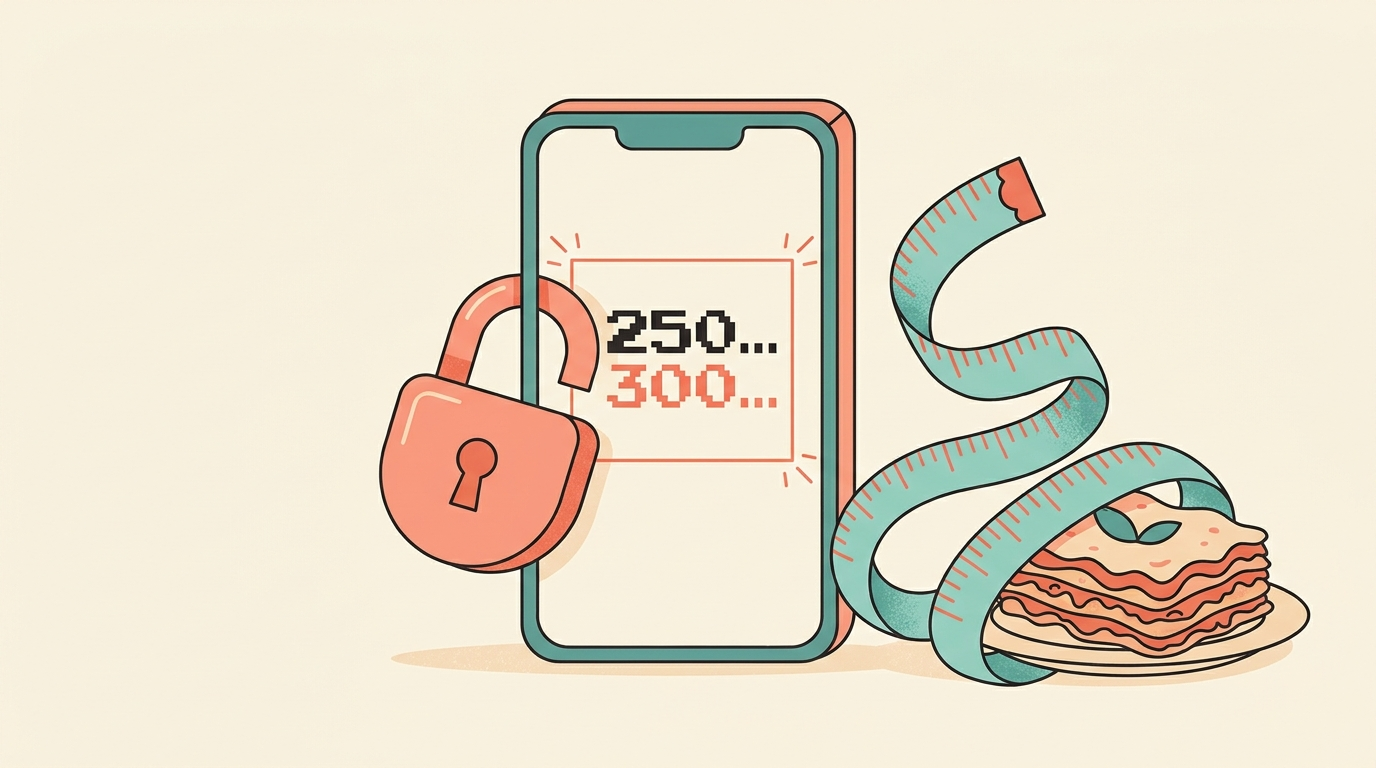
The bigger story this cycle is a bug that took two tries to actually find. Users kept asking Mr Bite to change their calorie target through chat, watching it revert days or weeks later, always back to their own TDEE, always with the macros left untouched. The first theory, a stale client or a read-precedence bug, was wrong. The real cause was a second calorie calculator nobody remembered was there: a database trigger that fires on every write to the settings table and silently recomputes a standard calorie formula over whatever number was just saved, unless a separate manual-override field is also set. The chat tool set the target and labeled it manual, but never wrote that field, so the trigger overwrote the user’s own number inside the same transaction that was supposed to save it. Tested directly against the live function: pushing a calorie target of 1800 with the method set to manual came back 2448. One user asked four times over two days before giving up on chat and using the in-app manual screen instead, the one path that happened to write the field the trigger checks. The chat tool now writes it too, and a follow-up migration retires the trigger’s authority over the target entirely, so the app owns the number instead of a database function quietly guessing it back.
The same audit turned up a second bug hiding in that trigger: a missing onboarding flag was being written back as false instead of staying unset, which is how roughly one in ten established accounts ended up permanently marked as never having finished onboarding, quietly hiding the First Steps checklist from people who’d been using the app for months. Both are fixed and live. Separately, imported recipes got a real fix for something that’s been off since the importer shipped: asked to invent both a serving count and per-serving macros in the same pass, the model was inventing a plausible-sounding count (4 servings, in 43% of imports) and backing macros into it, so a lasagna whose ingredients add up to roughly 2.5 kilograms and 3,000 calories got filed as “4 servings, 620 kcal each,” a 630-gram plate against a normal 350 to 400 gram portion. The importer now reports the one number the ingredients actually support, the total, and divides servings out of it instead of guessing them first.
None of this has shipped under its own version number yet, so add it to the pile waiting for whatever comes after 1.8.1. Also in that pile: saved meal plans can now be shared by link and imported back by whoever receives it; the Recent foods list, Progress averages, adherence bars and 180-day badges stopped quietly emptying every Monday, a bug traced to a weekly view of meal-plan data being fed to screens that needed the full history instead; the log sheet’s keyboard no longer shoves the meal-and-date dock up over the ingredient list while you’re typing; and every food photo in the app, search results, recipe previews, plan detail, now taps open to a real full-screen view instead of staying a thumbnail.
Three Quick Bites

-
A review of more than 350 studies found eating less protein may support longer, healthier lives, especially for people who aren’t training hard. University of Wisconsin-Madison researchers Dudley Lamming and Bailey Knopf synthesized evidence across humans, mice, insects and yeast showing that restricting protein and specific amino acids improves metabolism, lowers inflammation and activates pathways tied to healthy aging, while noting that active people still benefit from higher protein intake. It’s the review behind the essay above. ScienceDaily
-
An oral GLP-1 pill produced a statistically significant, placebo-adjusted weight loss of 11.3% over 36 weeks. Structure Therapeutics’ Phase 2b ACCESS trial gave 230 adults with obesity or overweight once-daily doses of the small-molecule pill aleniglipron, with the 120mg dose reaching that result and a tolerability profile in line with existing GLP-1 drugs; results were published in Nature Medicine. Unlike injectable GLP-1s, it’s a tablet that can be taken with or without food. Structure Therapeutics
-
Abdominal obesity combined with vitamin D deficiency was linked to a 123% higher risk of death over six years in adults over 50. Researchers from the Federal University of São Carlos and University College London followed 5,520 participants in the English Longitudinal Study of Ageing and found each risk factor raised mortality risk on its own, abdominal obesity by 47%, vitamin D deficiency by up to 91%, but the combination compounded well past either alone, possibly because excess abdominal fat traps circulating vitamin D. ScienceDaily
Tool of the Week: OpenAlex

This week’s pick is for anyone who wants to check a claim like “a review of 350 studies found X” the way research actually verifies it: by seeing which papers feed into that number and who has built on it since. OpenAlex is a free, fully open catalog of more than 250 million scholarly works, no login and no paywall, with structured metadata: authors, institutions, abstracts, and real citation graphs connecting a claim to what it rests on and what it’s shaped since. For readers: search a paper’s title and you can see its reference list and who has cited it, which is the fastest way to tell whether “a major review” is a foundational document or a fringe one contradicted by everything around it. For builders: the REST API is free and needs no key for reasonable use, a straightforward way to let a coach look up a paper’s venue, citation count and open-access status before repeating a claim with more confidence than the paper’s own standing supports. openalex.org. Free, public, no signup required.
Thanks for reading. If you’d rather your coach’s targets moved with what you’re actually doing than sit on one number for everyone, Mr BITE is free on iOS and Android.
Michael, building Mr BITE